Introduction
FRP Core rods are transforming industries by offering a combination of high strength, low weight, and corrosion resistance. These advanced materials, made from fibers like glass, carbon, or aramid, are ideal for applications where durability and weight savings are crucial. In this article, we’ll explore the composition, advantages, and applications of FRP core rods. You’ll discover how these innovative components are changing the landscape of construction, infrastructure, and electrical systems.
Understanding FRP Core Rods: The Basics
What Is FRP?
FRP (Fiber Reinforced Polymer) is a composite material consisting of high-strength fibers embedded in a polymer matrix. The fibers provide strength and stiffness, while the resin binds them together and offers protection from environmental factors. FRP core rods are typically used for reinforcement in various applications, replacing traditional metal rods in many industries, offering both superior performance and versatility.
Core Components of FRP Core Rods
FRP core rods are made by combining strong fibers and a resin matrix. Common fiber types used include:
Glass Fiber: Most widely used, offering good strength-to-weight ratio and excellent electrical insulation properties.
Carbon Fiber: Known for exceptional tensile strength and stiffness, although it’s electrically conductive, making it unsuitable for electrical applications.
Aramid Fiber (e.g., Kevlar): Provides excellent impact resistance and vibration damping.
The resin matrix, typically made of epoxy or polyester, holds the fibers together and protects them from moisture and chemicals. These components work synergistically to provide a strong, lightweight rod that excels in tensile strength, corrosion resistance, and flexibility.
Manufacturing Process: Pultrusion
FRP core rods are commonly produced using the pultrusion process, a continuous manufacturing technique. In this process, fibers are pulled through a resin bath, then passed through a heated die where the resin cures, forming the rod. This method ensures a uniform, high-quality product with consistent strength and performance. Pultrusion allows for precise control over fiber orientation, which is critical for optimizing the rod's mechanical properties for specific applications.
Key Advantages of FRP Core Rods
Exceptional Strength-to-Weight Ratio
One of the key advantages of FRP core rods is their superior strength-to-weight ratio. Compared to traditional materials like steel, FRP rods are up to 70-80% lighter, making them easier to transport and install. Despite their lightweight nature, they offer excellent tensile strength, allowing them to support heavy loads without adding unnecessary weight to structures.
Corrosion Resistance
FRP core rods stand out in corrosive environments where traditional materials like steel would rust and degrade. Unlike metals, FRP rods do not corrode when exposed to chemicals, saltwater, or harsh weather conditions. This makes them ideal for use in applications such as marine structures, bridges, and electrical insulators exposed to outdoor environments, where corrosion resistance is crucial.
Lightweight & Durable
FRP core rods combine the advantages of being lightweight with exceptional durability. Their resilience to environmental degradation means that structures reinforced with FRP rods require less maintenance and have a longer lifespan than those using traditional reinforcement materials. This combination of features makes them perfect for long-term applications.
Applications of FRP Core Rods
Construction and Infrastructure
In the construction industry, FRP core rods are increasingly used to reinforce concrete structures, particularly in areas prone to corrosion, such as bridges and marine environments. Their corrosion resistance makes them an excellent choice for projects that require long-term durability in harsh conditions. FRP core rods also provide critical support in soil stabilization and ground anchoring projects.
Power Transmission and Distribution
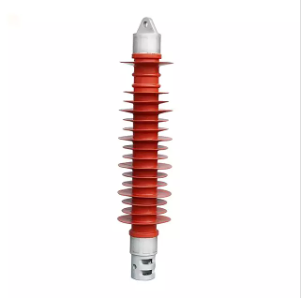
In high-voltage power transmission, FRP core rods are used as the central support in composite insulators. These insulators, designed for use in electrical grids, rely on the mechanical strength and corrosion resistance of FRP core rods to ensure reliable service over long distances. For 11kV insulators, 33kV insulators, and higher voltage ratings like 69kV insulators, the use of FRP core rods provides an essential advantage in reducing maintenance and extending the service life of insulators.
Telecommunications and Aerospace
The telecommunications industry uses FRP core rods as reinforcement for fiber optic cables, ensuring that the cables maintain their shape and structural integrity during installation. Similarly, in the aerospace sector, the lightweight and strong nature of FRP core rods makes them ideal for aircraft components, offering reduced weight without compromising strength or safety.
The Manufacturing Process of FRP Core Rods
Pultrusion Process
The pultrusion process involves the continuous pulling of fibers through a resin bath, followed by curing in a heated die. This process ensures that the fibers are uniformly impregnated with resin, producing a smooth and consistent rod. The pultrusion method allows manufacturers to control fiber orientation and resin content, ensuring the rod meets the specific mechanical and environmental performance standards required for its application.
Customization for Specific Applications
FRP core rods can be customized by adjusting the fiber types, resin formulations, and orientations to meet the specific needs of various industries. For example, epoxy resins offer high thermal stability, while polyester resins are more cost-effective for general-use applications. By tailoring these components, manufacturers can produce FRP core rods with optimized properties for applications ranging from electrical insulation to structural reinforcement.
FRP vs Traditional Materials
Performance Comparison
When selecting materials for different applications, it's crucial to understand the performance differences between FRP core rods and traditional materials like steel. The following table outlines the key features of both materials, highlighting their strengths and providing insights into their applications and considerations.
| Property | FRP Core Rod | Steel | Applications & Considerations |
| Corrosion Resistance | Excellent, ideal for harsh environments like seawater and chemicals | Prone to rust, especially in humid and saline environments | FRP is suitable for marine structures, bridges, and chemical plants. |
| Weight | 70-80% lighter, reducing overall structural load | Heavier, increases structure weight and transportation costs | FRP is ideal for lightweight designs, such as power towers and aerospace applications. |
| Tensile Strength | 2-3 times higher, providing stronger support | Lower, suitable for static load-bearing structures | FRP is used in high-tension applications like power transmission and suspension cables. |
| Elastic Modulus (Rigidity) | Lower, better suited for tensile applications, not ideal for high rigidity | High rigidity, suitable for applications requiring stiffness | FRP is not ideal for applications requiring extreme rigidity, like skyscrapers. |
Tip:For applications involving high tensile strength but not requiring extreme rigidity, such as 220kV insulators, FRP core rods offer superior performance compared to steel.
Economic and Sustainability Benefits
The economic and sustainability aspects of FRP core rods also set them apart from traditional materials like steel. Although FRP core rods may have a higher initial cost, they offer long-term benefits, including reduced maintenance costs and longer service life. The following table outlines the financial and environmental advantages of both materials.
| Factor | FRP Core Rod | Steel | Applications & Considerations |
| Initial Cost | Higher, due to specialized production and materials | Lower, steel is generally less expensive | Steel may be a short-term choice, but FRP is a better investment for long-term durability. |
| Maintenance Costs | Very low, no corrosion or rust issues, reducing replacement frequency | High, requires regular maintenance, cleaning, and coating | FRP is ideal for corrosive environments, such as marine and chemical facilities. |
| Lifespan | Long, typically lasting 50+ years | Shorter, needs periodic maintenance and replacement | FRP excels in environments where long-lasting performance is crucial, such as 220kV insulators. |
| Transportation & Installation Costs | Lightweight, reduces transport costs and installation complexity | Heavy, increases transport costs and installation difficulty | FRP’s lightweight nature makes it more efficient for remote locations and harsh environments. |
| Sustainability | Recyclable, with growing trends toward using bio-based resins | Difficult to recycle, higher resource consumption | FRP is becoming the material of choice for sustainable construction, especially in eco-conscious projects. |
Tip:For long-term operations, FRP core rods offer a significant return on investment, particularly in corrosive environments, by reducing maintenance and operational costs compared to steel.
Future Trends and Innovations in FRP Core Rods
Material Advancements
In addition to basalt fibers, the integration of carbon nanotubes (CNTs) and graphene into FRP core rods is being explored to significantly enhance their strength-to-weight ratio and electrical conductivity. These advanced materials can improve the mechanical properties of FRP, particularly in aerospace and high-performance automotive applications. The incorporation of bio-based fibers, such as hemp or flax, is also gaining attention for producing more sustainable and environmentally friendly FRP solutions.
Technological Developments in Manufacturing
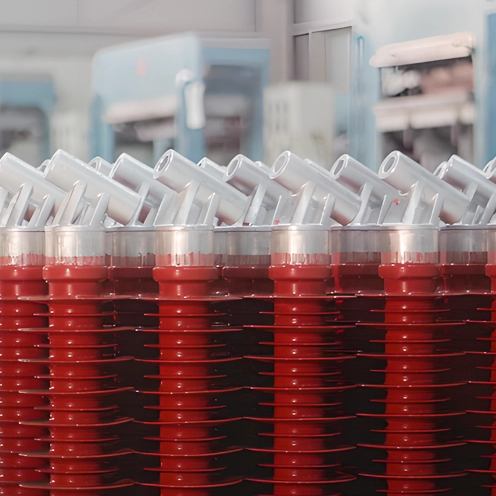
Recent innovations in pultrusion technology have introduced automated resin injection systems, allowing for better control over resin distribution and reducing the environmental impact by minimizing waste. Moreover, 3D printing techniques are now being tested to create custom fiber reinforcements, enabling more intricate designs and optimizing the material’s performance in specialized applications. These advancements in manufacturing promise to further enhance the durability and cost-effectiveness of FRP core rods.
Sustainability and Recycling
The sustainability of FRP core rods is a growing area of focus. Manufacturers are exploring the use of bio-based resins and recycled materials to create FRP core rods that are even more environmentally friendly. As recycling technologies improve, FRP core rods may become fully recyclable, further reducing their environmental impact.
Conclusion
FRP core rods are increasingly essential in modern infrastructure due to their superior strength-to-weight ratio, corrosion resistance, and durability. They are replacing traditional materials like steel in applications across construction, electrical power transmission, and aerospace. Customizable for specific needs, FRP core rods offer long-term cost-effectiveness and sustainability. As technology advances, they will play a crucial role in building eco-friendly and resilient infrastructure. Hebei Jiuding Electric Co., Ltd. provides high-performance FRP core rods that excel in demanding environments, offering durability and cost savings in various industries. Their products ensure reliability and long-term benefits for any project.
FAQ
Q: What is an FRP Core Rod?
A: An FRP core rod is a structural component made from high-strength fibers like glass, carbon, or aramid, embedded in a polymer matrix. It offers superior strength, corrosion resistance, and lightweight properties compared to traditional materials.
Q: What are the benefits of using FRP Core Rods?
A: FRP core rods provide excellent corrosion resistance, a high strength-to-weight ratio, and durability. They are ideal for use in harsh environments and applications like high-voltage insulators, construction, and infrastructure.
Q: How are FRP Core Rods manufactured?
A: FRP core rods are produced using the pultrusion process, where fibers are pulled through a resin bath and cured in a heated die to form a strong, uniform rod.
Q: Why are FRP Core Rods used in power transmission?
A: FRP core rods are used in power transmission due to their high tensile strength, corrosion resistance, and ability to withstand extreme environmental conditions, ensuring the durability of composite insulators.
Q: How do FRP Core Rods compare to steel?
A: FRP core rods are lighter and more corrosion-resistant than steel, making them ideal for applications where weight and longevity are critical. However, they have a lower modulus of elasticity than steel, affecting rigidity.


