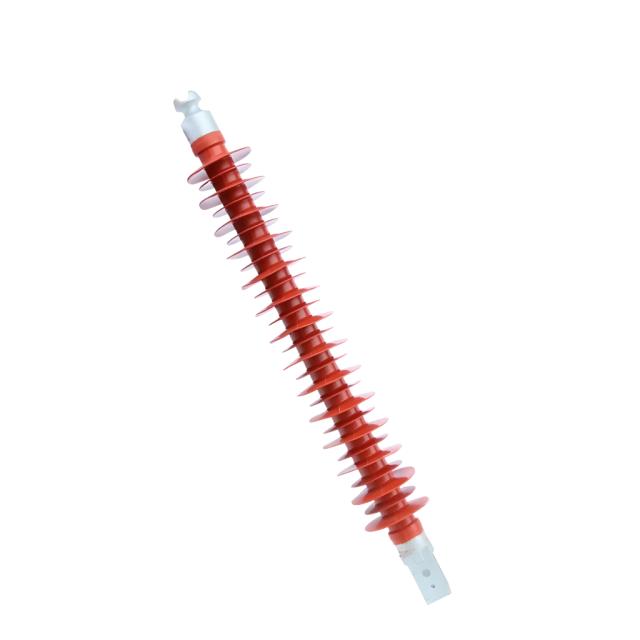
Deep Dive: The 110-220kV Insulated Cross-arm in Transmission Networks
High-voltage transmission networks face unique engineering hurdles that standard distribution lines rarely encounter. As voltage scales up, the mandatory clearance between phases must expand proportionally to prevent dangerous electrical arcing. Historically, lattice towers relied on massive steel arms paired with lengthy suspension insulator strings to maintain these critical safety margins. This conventional approach demands vast right-of-way corridors and visually intrusive, heavy tower structures capable of bearing the immense combined weight.
To overcome these spatial and structural limitations, specialized composite technology fundamentally alters the engineering equation. By seamlessly integrating the physical support mechanism with the dielectric properties of weather-resistant silicone rubber sheds, grid planners can completely eliminate the need for dangling suspension insulators. Upgrading to a high-performance 110-220kV insulated cross-arm directly addresses these rigorous high-voltage demands.
Imagine a field scenario where a utility needs to uprate an aging 69kV corridor to a 138kV capacity to feed a rapidly growing suburban development. Ordinarily, this would trigger a multi-million dollar capital project to tear down existing poles, acquire wider land easements, and erect significantly taller towers. Instead, retrofitting the existing tower bodies with these compact composite structures drastically restricts conductor swing during high wind events. Consequently, the utility secures the required electrical clearance for the elevated voltage without expanding the physical footprint of the line.
Naturally, deploying such critical components requires stringent validation. The internal fiberglass core must demonstrate unyielding cantilever strength, proving it can endure extreme torsion and tension under both everyday operations and catastrophic broken-wire scenarios.
Industry Shift: The Push Toward Grid Hardening
Recent utility sector analyses reveal a massive, heavily funded push toward grid hardening in response to escalating climate volatility. Regulatory commissions worldwide are increasingly penalizing utility providers for preventable wildfire ignitions and prolonged storm-related grid failures. This intense scrutiny has rapidly accelerated the sector-wide transition away from combustible, easily compromised timber toward engineered, predictable materials.
Utilities are no longer just maintaining lines; they are actively future-proofing them against extreme weather events that now occur with alarming frequency. The traditional wood cross arm, once the backbone of electrical distribution, is increasingly viewed as a structural liability in high-risk fire zones and hurricane-prone coastal regions. By transitioning to composite materials, grid operators are fundamentally shifting their strategy from reactive emergency repairs to proactive grid resilience.
Financial Impact: Total Cost of Ownership vs. Upfront Cost
Procurement managers often experience sticker shock when directly comparing the initial invoice of composite materials against raw, chemically treated timber. It is an undeniable reality that premium insulated structures carry a higher day-one capital expenditure. Nevertheless, evaluating critical utility infrastructure exclusively through the lens of upfront pricing is a notoriously flawed financial strategy that masks long-term liabilities.
Forward-thinking decision-makers analyze the total cost of ownership spanning a realistic 40 to 50-year operational lifecycle. When viewed through this long-term perspective, the economic superiority of composite materials becomes mathematically irrefutable. Consider the operational reality of traditional wood cross arms. Depending on regional climate and pest activity, timber typically degrades within 15 to 25 years. Throughout this relatively short lifespan, utilities must fund continuous inspection patrols to identify fungal decay, internal rot, and woodpecker cavities.
When a wooden arm inevitably fractures during a winter ice storm, the utility hemorrhages money on emergency replacement materials, overtime labor for line crews, and heavy equipment deployment. More critically, they often face severe regulatory fines for prolonged power outages. By deploying an advanced 110-220kV composite cross-arm, utilities effectively neutralize these recurring operational drains. These modern assets operate on a deploy-and-forget paradigm.
Cost Factor
Traditional Wood Cross Arm
Insulated Composite Cross Arm
Initial Material Cost
Low
Moderate to High
Expected Lifespan
15 to 25 Years
40 to 50 Plus Years
Installation Labor
High due to heavy weight
Low due to lightweight profile
Maintenance Costs
High routine inspections
Zero to Minimal
Replacement Cycle over 50 Years
2 to 3 times
0 times
Structural Outage Risk
High vulnerability to storms
Low due to high flexural strength
By factoring in drastically reduced labor requirements, the total elimination of replacement cycles, and heavily mitigated outage risks, the lifecycle return on investment of composite structures heavily outweighs the initial capital expenditure.
Grid Modernization and Sustainability Goals
This structural shift aligns flawlessly with modern environmental, social, and governance mandates. For over a century, the power sector has relied on heavy chemical preservatives like creosote and pentachlorophenol to prolong the life of wooden poles and structural arms. Over decades of exposure, these toxic compounds inevitably leach into the surrounding soil and groundwater, creating severe ecological hazards and exposing utility companies to complex regulatory compliance liabilities.
Adopting composite technology offers a definitively eco-friendly resolution. Because materials like silicone and fiberglass are chemically inert, they require zero toxic treatments and will not contaminate local ecosystems. Additionally, pivoting away from timber directly mitigates industrial deforestation. While manufacturing a customized 110-220kV insulated cross-arm does generate an initial carbon footprint, its extraordinary half-century lifespan drastically offsets this impact. A component that endures for 50 years without demanding emergency maintenance fleets or replacement parts substantially slashes a utility company's scope 3 emissions.
Real-World Performance and Field Endurance
Theoretical engineering models are valuable, but the ultimate proving ground for any grid component is its endurance in unforgiving field environments. Legacy materials frequently falter when subjected to relentless climatic stress, creating hazardous vulnerabilities across the network.
Take coastal infrastructure, for instance. Ocean winds carry dense, highly conductive salt fog that settles directly onto utility equipment. On conventional wooden structures utilizing separate porcelain insulators, this persistent salt accumulation frequently bridges the insulation gap, triggering electrical tracking. This phenomenon inevitably leads to localized pole fires, catastrophic structural damage, and neighborhood-wide blackouts. In stark contrast, composite insulated arms leverage the unique properties of hydrophobic silicone rubber sheds. This advanced material actively repels moisture, fracturing water droplets and preventing the formation of a continuous, conductive liquid film. Even during heavy coastal squalls, the self-cleaning silicone surface preserves its exceptional dielectric strength, effectively neutralizing the threat of flashovers.
Tropical zones introduce an entirely different set of threats. Suffocating humidity and relentless rainfall dramatically accelerate biological decay. In documented field applications across high-humidity regions, operators battled endless maintenance cycles as fungi and termites decimated treated wood in a fraction of its advertised lifespan. Upon retrofitting their failing corridors with composite alternatives, these utilities witnessed an immediate stabilization of their regional power delivery. The non-porous fiberglass core proved utterly impenetrable to moisture, rot, and boring insects.
Engineering Specs: Choosing the Right Manufacturer
Transitioning to composite infrastructure is a massive logistical undertaking, making the selection of a manufacturing partner just as critical as the technology itself. Procurement teams must look beyond aggressive pricing and rigorously audit the supplier's engineering pedigree. Not all composite fabricators operate to the exacting tolerances required for utility-grade reliability.
First and foremost, demand absolute transparency regarding quality control and testing protocols. A premier manufacturer must supply comprehensive type test reports documenting steep-front impulse voltage tests, power frequency withstand capabilities, and destructive mechanical cantilever load limits. For example, a true utility-grade 110-220kV insulated cross-arm with customized end fittings should feature an ECR fiberglass core capable of handling specified cantilever loads, often customized between 10kN and 100kN depending on phase spacing and wind loading requirements.
Furthermore, grid architectures are rarely uniform. The ideal supplier should function as an engineering partner, offering robust customization capabilities. They must possess the technical agility to modify hardware fittings, adjust High-Temperature Vulcanized silicone shed profiles for extended creepage distances, and tailor dimensions to accommodate specific transmission voltage demands.
Finally, verify strict adherence to international regulatory frameworks. Products must unequivocally comply with the latest International Electrotechnical Commission specifications governing composite insulators. Partnering with a certified facility guarantees that their production lines will consistently deliver the resilient components necessary to future-proof your network.
Conclusion
Upgrading an aging electrical grid demands durable, forward-thinking solutions that can withstand the rigors of a changing climate. Replacing vulnerable timber with engineered composite structures is no longer just an innovative concept; it is a fundamental requirement for securing long-term operational reliability. These advanced supports drastically enhance public safety, eliminate wasteful recurring maintenance expenditures, and empower utilities to achieve ambitious global sustainability milestones.
Whether you are addressing severe woodpecker damage on a local distribution line or planning a major corridor uprate, modernizing your physical assets is the most effective way to guarantee uninterrupted power delivery. Explore high-performance composite solutions tailored to your specific grid requirements at LONG Insulator and secure the future of your power infrastructure today.
Frequently Asked Questions
What is the lifespan of an insulated cross arm compared to a wood cross arm?
While traditional timber supports typically survive 15 to 25 years before succumbing to rot, moisture, or insect damage, high-quality composite alternatives are engineered for extreme longevity. In most climates, an insulated cross arm will reliably operate for 40 to 50 years with virtually zero routine maintenance.
Can insulated cross arms be used for high-voltage transmission lines?
Absolutely. Specialized composite structures are meticulously designed to manage the immense mechanical tension and stringent electrical clearance mandates of high-voltage transmission networks, effectively supporting lines operating up to 220kV.
Are insulated cross arms difficult to install?
On the contrary, they actively streamline the construction process. Because fiberglass and silicone are significantly lighter than their steel or wood counterparts, these arms are much easier to transport to rugged, off-road locations. This lightweight profile reduces physical strain on linemen, minimizes the need for heavy lifting equipment, and drastically cuts down installation time.
How do insulated cross arms help with extreme weather?
Composite materials are inherently non-porous, meaning they will not absorb rainwater, swell, or freeze during winter storms. Furthermore, their exceptional flexural strength allows them to absorb and withstand hurricane-force winds and heavy ice accumulation without snapping, while their hydrophobic silicone exterior prevents electrical tracking in demanding coastal salt-fog environments.
How do insulated cross arms improve overall grid resilience?
By eliminating multiple points of failure found in traditional assemblies, these integrated units prevent cascading outages. Their unified design removes the swinging motion of suspension insulators, maintaining strict phase clearances even during violent gale-force winds, which directly translates to fewer short circuits and higher grid reliability.
What is the weight difference between wood and composite cross arms?
Composite structures are remarkably lighter, often weighing 30 to 50 percent less than heavily treated timber arms of comparable strength. This drastic weight reduction not only lowers shipping costs but also reduces the dead load stress on the main utility pole, extending the life of the entire support structure.