Introduction
Electrical substations are essential for safely distributing electricity across homes and businesses. However, designing and maintaining these critical infrastructures presents challenges, such as extreme weather and corrosion risks. To overcome these, materials with exceptional properties are needed. This is where FRP Core Rods come in, offering superior strength, resilience, and safety. In this article, we will explore how FRP improves substation design, focusing on its benefits for durability, safety, and long-term performance. You’ll also learn about the role of FRP Core Rods in enhancing substation resilience, making it a go-to solution for modern power systems.
What is FRP and Why it Matters for Substations?
Definition of FRP
Fiber Reinforced Plastic (FRP) is a composite material made from a polymer matrix reinforced with fibers, commonly glass fibers. This combination makes FRP lightweight, strong, and resistant to various environmental challenges such as corrosion, moisture, and high electrical stress, making it an ideal material for use in electrical substations.
Unique Properties of FRP for Electrical Substations
FRP possesses several unique properties that make it a superior choice for electrical substation design. Its high strength-to-weight ratio ensures structural integrity without adding excess weight to the infrastructure. This is particularly important in substation environments, where minimizing weight can reduce the risk of sagging and structural failure. Additionally, FRP's corrosion resistance ensures that components can withstand exposure to the elements, which is critical in harsh environments where metals would deteriorate over time.
Comparison with Traditional Materials
When compared to traditional materials like steel, aluminum, and ceramics, FRP excels in various areas. Unlike steel, which is prone to corrosion, FRP does not rust, making it more suitable for long-term use in outdoor environments. While aluminum is lightweight, it lacks the same resistance to environmental stresses, particularly in coastal or industrial areas. FRP, therefore, offers a balanced combination of strength, durability, and lightweight properties that metals often fail to provide.
Key Advantages of Using FRP in Electrical Substation Design
Corrosion Resistance
One of the standout benefits of FRP is its corrosion resistance. Unlike metals that rust when exposed to moisture, FRP is highly resistant to water, chemicals, and extreme temperatures. This resistance makes it ideal for electrical substations that operate in humid, coastal, or industrial environments where corrosion is a significant concern.
Strength-to-Weight Ratio
The strength-to-weight ratio of FRP is another critical advantage. FRP offers the structural integrity required for heavy-duty applications, without the cumbersome weight of steel or concrete. This property not only facilitates easier installation but also contributes to cost savings, as lighter components reduce transportation and handling costs.
Longevity and Low Maintenance
FRP components are known for their long lifespan. Unlike traditional materials, which require frequent repairs and replacements due to wear and corrosion, FRP components often last decades with minimal maintenance. This low maintenance requirement reduces operational costs and downtime, making FRP an economically viable solution for substations.
Enhancing Substation Safety with FRP
Non-Conductive Nature of FRP
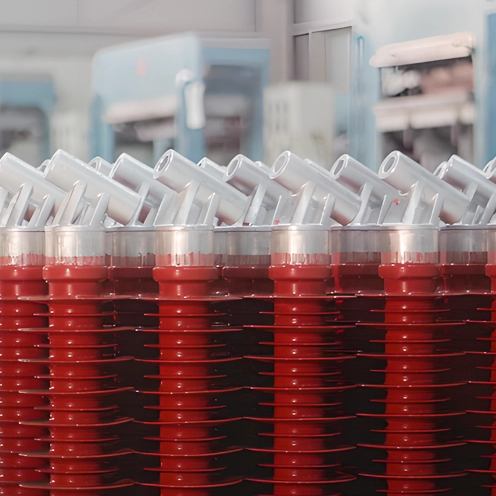
As a non-conductive material, FRP effectively reduces the safety risks of electrical leaks or current contact in power facilities. The following table summarizes the applications, efficiency, technical specifications, and considerations of FRP’s non-conductive nature in electrical facilities.
| Application Area | Key Features | Technical Specifications | Efficiency | Considerations |
| Power Facility Infrastructure | Non-conductive, suitable for high-voltage environments | Resistivity > 10^12 Ω·cm | Enhances facility safety, prevents electrical leakage | Ensure no damage to FRP surface, avoid conductive defects |
| External Protection Structures in Substations | Used for fencing, equipment support structures, non-conductive | Voltage withstand: ≥ 50kV | Improves overall equipment safety, reduces electrical accidents | Regularly check for structural integrity, avoid cracks or damage |
| Internal Isolation Safety Zones in Substations | Isolates dangerous areas around transformers, switchgear | Thermal resistance: -40°C to +120°C | Reduces personnel exposure risk, prevents electrical shock | Keep surface clean when used in high-humidity environments |
| Grounding Systems in Power Distribution | Simplifies grounding design, reduces weight of grounding equipment | Dielectric strength: ≥ 100 kV/cm | Reduces grounding system maintenance frequency, improves work efficiency | Ensure compatibility of FRP with grounding materials during installation |
Tip:FRP’s non-conductivity makes it an ideal choice for high-voltage power systems, especially in environments where high safety is required and grounding is difficult.
Impact Resistance
FRP’s impact resistance plays a vital role in enhancing the safety of electrical substations. In areas prone to high winds, earthquakes, or physical stress, FRP absorbs shocks and prevents component failure. This ability ensures that substations remain operational during extreme events, reducing downtime and increasing resilience.
Improved Grounding and Safety Features
FRP simplifies grounding systems. Since it is non-conductive, FRP reduces the complexity of grounding requirements, making installation faster and safer. This ensures that electrical components are not only safely insulated but also more secure against fault currents or accidental contact.
FRP’s Role in Substation Resilience During Extreme Conditions
Weather Resistance and Durability
FRP’s weather resistance ensures that it remains stable and durable under extreme environmental conditions. Whether in scorching heat or freezing cold, FRP does not degrade, crack, or lose its mechanical properties. This makes it a reliable material for substations in regions with severe weather conditions, such as deserts, coastal areas, or regions prone to storms and hurricanes.
FRP for Seismic Zones
In seismic zones, where infrastructure is at risk from earthquakes, FRP provides structural stability. Its lightweight yet durable properties reduce the overall mass of substation components, minimizing the structural stress during seismic events. FRP’s flexibility and strength allow for more resilient designs that can withstand the forces generated by earthquakes.
Cost-Effectiveness in Harsh Environments
The use of FRP significantly reduces repair and maintenance costs in harsh environments. Unlike metal components, which corrode over time and require frequent replacement, FRP remains intact, reducing the need for costly repairs. This makes it a long-term cost-effective solution, especially for remote substations that are difficult to maintain.
FRP Core Rods: Essential Components for Electrical Substation Performance
What Are FRP Core Rods?
FRP Core Rods are reinforced plastic components used in substation designs, specifically for mechanical support and structural integrity. These rods are made from a combination of fiberglass and resin, providing a high strength-to-weight ratio, which makes them ideal for electrical substations where both strength and light weight are required.
Advantages of Using FRP Core Rods in Substations
FRP core rods, with their excellent mechanical strength and low weight, have become an essential component in the design of electrical substations. The following table provides a detailed summary of the advantages, technical performance, application areas, and considerations of using FRP core rods.
| Application Area | Key Advantages | Technical Specifications | Efficiency | Considerations |
| Power Substation Support Structures | High strength, low weight, ideal for large-scale power facilities | Tensile strength: ≥ 600 MPa | Provides reliable structural support, reduces load | Ensure tight connection between rods and structures during construction |
| Electrical Equipment Isolation Rods | Excellent insulation, prevents electrical leakage | Insulation resistance: > 10^12 Ω·cm | Enhances equipment safety, prevents electrical short circuits | Ensure rods are not damaged during installation, avoid electrical issues |
| Ground and Underground Line Support in Substations | FRP rods withstand extreme weather and high temperatures | Temperature range: -40°C to +90°C | Improves long-term system stability | Regularly check rod integrity when exposed to extreme climates |
| Fencing Systems for High-Voltage Power Facilities | Prevents electrical currents from passing, enhances facility protection | Electrical strength: ≥ 30 kV/cm | Enhances electrical safety of fencing systems | Prevent moisture from penetrating rods, which may affect insulation performance |
Tip:When selecting FRP core rods, besides strength and weight, also consider their thermal and corrosion resistance to ensure long-term stability and performance in extreme environments.
Case Study: FRP Core Rods in Real-World Substation Projects
An example of FRP Core Rods in action can be seen in a large substation project in a coastal region. Engineers chose FRP core rods for structural support, taking advantage of their lightweight and non-corrosive properties. The installation of these rods not only ensured the resilience of the substation against environmental challenges but also reduced the overall installation time and labor costs due to their ease of handling and assembly.
FRP in Substation Expansion and Future-Proofing
Modular Design Flexibility
FRP provides modular design flexibility, allowing substations to be easily expanded or reconfigured as demand grows. Since FRP components can be customized for specific needs, they allow for easy integration into existing systems, helping utilities to future-proof their infrastructure without expensive redesigns.
Preparing for Future Electrical Grid Needs
As the demand for renewable energy and smart grid solutions grows, FRP’s adaptability makes it a perfect material to support future electrical grid needs. It can withstand the integration of diverse energy sources, such as solar and wind, while maintaining the stability and reliability of the electrical system.
Sustainability and Environmental Benefits
FRP’s sustainability benefits are clear. It’s a long-lasting material that reduces the need for frequent replacements, cutting down on waste. Additionally, the manufacturing of FRP is more energy-efficient compared to traditional materials, aligning with global trends toward greener infrastructure.
The Future of FRP in Electrical Substations
Technological Advancements in FRP Materials
Recent innovations in FRP materials focus on enhancing their mechanical properties, such as increasing tensile strength and improving resistance to high-temperature environments. Advanced composites, such as carbon fiber-reinforced polymers (CFRP), are being integrated with traditional FRP to create even stronger, more lightweight solutions. Additionally, research into bio-based resins is paving the way for more sustainable, environmentally friendly FRP alternatives, ensuring a more energy-efficient and green solution for industrial and electrical applications.
Integration with Smart Substation Technology
FRP's compatibility with smart substation technologies is enhancing the overall performance of modern power systems. As substations incorporate SCADA systems, real-time monitoring, and automated controls, FRP materials enable lightweight structural components that facilitate the installation of sensors and communication devices. Furthermore, FRP’s customizable properties allow it to seamlessly integrate with new technologies, improving the operational efficiency, safety, and scalability of substations while minimizing maintenance requirements.
Expanding Global Adoption of FRP in Electrical Infrastructure
The increasing adoption of FRP in global electrical infrastructure is driven by its performance in challenging environments and its role in supporting the growing demand for sustainable energy solutions. With utilities and energy providers seeking durable, low-maintenance materials, FRP is rapidly replacing traditional materials in both high-voltage substations and transmission systems. In regions facing extreme weather conditions or harsh industrial environments, FRP's corrosion resistance and lightweight nature provide significant cost savings and reliability, further fueling its widespread use.
Conclusion
FRP provides significant advantages in enhancing the design and resilience of electrical substations. Its superior corrosion resistance, strength-to-weight ratio, and low maintenance requirements make it ideal for long-term performance in challenging environments. As utilities seek more efficient and sustainable solutions, FRP Core Rods play a pivotal role in supporting modern infrastructure. Hebei Jiuding Electric Co., Ltd.delivers reliable FRP products, contributing to safer, durable, and cost-effective substations that meet the evolving demands of the electrical sector.
FAQ
Q: What is FRP and why is it used in electrical substations?
A: FRP (Fiber Reinforced Plastic) is a composite material made of fiberglass and resin. It's used in electrical substations due to its high strength-to-weight ratio, corrosion resistance, and non-conductive nature, making it ideal for enhancing safety, durability, and performance in harsh environments.
Q: How do FRP Core Rods benefit electrical substations?
A: FRP Core Rods provide excellent mechanical strength while being lightweight, making them ideal for structural support in electrical substations. Their corrosion resistance ensures long-term reliability, reducing maintenance costs and downtime.
Q: What are the advantages of using FRP Core Rods in high-voltage areas?
A: FRP Core Rods are non-conductive, which helps prevent electrical hazards like shocks and short circuits. Their impact resistance also ensures the structural integrity of substations in extreme conditions, such as high winds or earthquakes.
Q: Why is FRP better than traditional materials like steel and aluminum?
A: Unlike metals, FRP doesn’t rust or corrode over time. It is lightweight, highly durable, and resistant to harsh environmental conditions, offering long-lasting performance without the frequent maintenance required by metals.
Q: Are FRP Core Rods cost-effective for long-term use in substations?
A: Yes, FRP Core Rods are cost-effective in the long run. They have a long lifespan and require minimal maintenance, significantly reducing repair costs and downtime compared to traditional materials like steel or aluminum.


