Strong coastal wind, salt fog carried from the sea, heavy mechanical tension from long-span conductors, and continuous electrical stress at high voltage levels—this is the real working environment where a long rod insulator must perform without compromise. It is not simply a supporting component on a tower. It is the device that simultaneously maintains electrical insulation, mechanical strength, and safe conductor spacing. In this article, we explain clearly what a long rod insulator is, what it actually does on transmission lines, where it is used, how materials influence performance, and how JD Electric designs composite solutions that meet demanding grid conditions worldwide.
What a long rod insulator actually does on a transmission line
A long rod insulator plays a dual role: electrical isolation and mechanical support. Both are equally important. If one fails, the transmission line fails.
Keeps the conductor electrically isolated from the tower
The first and most fundamental function of a long rod insulator is to prevent current from flowing from the conductor to the grounded tower structure. High-voltage transmission lines operate at tens, hundreds, or even thousands of kilovolts. Without reliable insulation, electrical breakdown can occur, leading to flashover, system trips, or equipment damage.
The insulation body of a composite long rod insulator provides a controlled creepage path along its surface. This ensures that leakage current remains within safe limits even under wet or contaminated conditions. The distance between energized conductor and grounded structure must be maintained consistently over years of service.
Carries mechanical loads and maintains safe spacing
Electrical isolation alone is not enough. Transmission lines are under continuous mechanical stress caused by conductor weight, wind pressure, ice load, vibration, and tension forces at dead-end structures.
A long rod insulator must withstand tensile forces while keeping conductors safely spaced from towers and from other phases. In suspension applications, it supports vertical load and dynamic motion. In tension or dead-end applications, it carries significant axial load. Mechanical reliability is just as critical as electrical performance.
Reduces the risk of flashover under pollution and wet conditions
Pollution, industrial dust, salt fog, and humidity increase surface conductivity. Under these conditions, the risk of flashover rises. The surface design of a composite long rod insulator plays an essential role in managing this risk.
Silicone rubber housing offers hydrophobic properties, meaning water forms droplets rather than continuous films. This interrupts leakage current paths and improves pollution performance. Proper shed profile and creepage distance design are key factors in ensuring stable operation in coastal, desert, or heavily industrial environments.
Where long rod insulators are used and why location changes the design
The design of a long rod insulator varies depending on where it is installed. Application context determines configuration.
Suspension strings on straight-line towers
On straight-line towers, suspension long rod insulators are used to support the conductor vertically. In these cases, the insulator must handle mechanical vibration and moderate tensile load while providing sufficient creepage distance for the environmental conditions.
Weight reduction and ease of installation are practical considerations in this scenario. Composite long rod insulators offer advantages due to lighter weight compared with porcelain alternatives.
Tension and dead-end towers
At dead-end structures or angle towers, mechanical tension increases significantly. The insulator must withstand high tensile force without mechanical failure.
End fittings and crimping quality become critical. Mechanical load rating must match system requirements with adequate safety margins. For high-voltage lines such as 500kV, precision manufacturing and strict quality control are essential.
Substations and special structures
Long rod insulators are also used in substation jumpers and portal structures. Compact installation spaces and specific electrical clearance requirements influence design choices.
Voltage class considerations from distribution to EHV and UHV
As voltage increases, design complexity increases. Higher voltage means stronger electric field stress, greater creepage requirements, and often additional field control elements. For 500kV and above, manufacturing capability becomes a symbol of technical strength. Producing reliable long rod insulators at these voltage levels requires advanced equipment and mature processes.
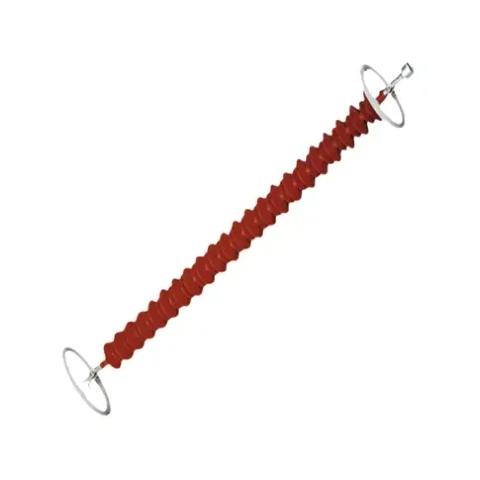
Composite vs porcelain long rod insulators in practical comparison
Buyers frequently compare composite long rod insulators with porcelain alternatives. Each material has characteristics that influence performance and logistics.
Mechanical behavior and weight differences
Composite long rod insulators are significantly lighter than porcelain. This reduces transportation cost, simplifies installation, and lowers tower loading requirements. Handling during construction becomes safer and more efficient.
Porcelain is brittle and can shatter under impact. Composite designs with fiberglass core rods provide high tensile strength and improved impact resistance.
Pollution performance and hydrophobicity
Silicone rubber housing used in composite long rod insulators offers hydrophobicity. Even after contamination, hydrophobicity migration helps maintain surface performance. This improves reliability in coastal or industrial environments.
Porcelain relies primarily on creepage distance and surface washing. In heavy pollution zones, composite designs often demonstrate improved long-term behavior.
Failure modes and reliability considerations
Porcelain insulators can fail through brittle fracture or mechanical cracking. Composite insulators may face aging or erosion challenges if materials or sealing are inadequate.
High-quality composite long rod insulators address these risks through strict material control, proper sealing design, and validated testing procedures. Reliable manufacturing processes and consistent quality management are essential for long service life.
Anatomy of a composite long rod insulator
Understanding the components of a composite long rod insulator helps explain what determines performance.
Insulation body and housing
The housing is typically made from high-quality silicone rubber compound. It must resist UV radiation, temperature variation, tracking, and weathering. Long-term stability under electrical stress is critical.
JD Electric produces its own rubber compound to ensure consistent quality control and performance stability.
Core rod and end fittings
The fiberglass core rod carries mechanical load. Its tensile strength and bonding quality directly influence safety.
Metal end fittings connect the insulator to conductors and supporting structures. Corrosion resistance and secure crimping are essential to prevent interface failure. JD Electric achieves self-production of core rods and fittings, allowing tighter quality management and cost control.
Sealing and protective structures
Effective sealing prevents moisture ingress into the core. Dust and environmental contaminants must not compromise internal integrity. Proper sealing extends service life and maintains electrical performance.
A quick use case to specification map buyers actually need
The following table helps align real-world applications with technical focus areas.
Use Case | What the Line Demands | Key Requirements to Check | Practical Focus |
Straight-line suspension | Support with vibration | Mechanical load rating, creepage distance | Long-term pollution performance |
Dead-end / tension | High tensile force | Tensile strength, fittings security | Interface reliability |
Coastal / heavy pollution | Wet contamination resistance | Creepage distance, hydrophobicity | Material and shed profile |
High altitude / UHV | Electric field control | Field grading design, corona control | Aging resistance |
This structured approach helps buyers evaluate what matters in different installation environments.
What we do differently as a long rod insulator supplier
JD Electric specializes in composite long rod insulators covering voltage levels from 10kV to 500kV, including suspension and dead-end types. The ability to manufacture 500kV products reflects advanced production capability and process control.
We operate with ISO9001, ISO14001, and ISO45001 certifications and maintain an annual production capacity of 2,000,000 composite insulators. Self-production of rubber compound, core rods, and fittings ensures quality consistency and cost efficiency.
Third-party validation strengthens credibility. Our 10–500kV long rod insulators have obtained inspection reports from XIHARI, an authoritative testing institution. Independent verification reduces acceptance risk and improves project confidence.
Our products have been deployed in over 20 provinces in China and more than 60 countries worldwide without accident records. This real-world application history demonstrates reliability under diverse environmental conditions.
Beyond product supply, we assist clients in matching site conditions—pollution level, mechanical load, voltage class, and hardware interface—to a suitable configuration. This practical support shortens project communication cycles and improves system reliability.
Conclusion
A long rod insulator is more than a simple support device. It is a critical component that ensures electrical isolation, mechanical strength, and long-term stability on transmission lines. Understanding where it is used, how materials influence performance, and what technical parameters truly matter helps utilities and EPC contractors make informed decisions. JD Electric combines manufacturing strength, material control, and verified testing to deliver dependable composite solutions for modern grids. If you would like to explore suitable specifications for your project environment, please contact us to discuss your voltage level, pollution conditions, and mechanical requirements. We are ready to support your next overhead line project with reliable composite suspension insulator solutions.
FAQ
1. What is the main function of a long rod insulator?
The primary function of a long rod insulator is to electrically isolate the conductor from the tower while carrying mechanical loads such as tension and vibration. It ensures stable and safe power transmission.
2. Why are composite long rod insulators preferred in polluted areas?
Composite long rod insulators use silicone rubber housing with hydrophobic properties. This reduces leakage current under wet and contaminated conditions, lowering the risk of flashover.
3. What voltage levels can composite long rod insulators handle?
Depending on design and manufacturing capability, composite long rod insulators can cover voltage levels from distribution systems to 500kV and above.
4. Why are third-party test reports important for long rod insulators?
Independent test reports verify compliance with technical standards and confirm performance reliability. They reduce project risk and improve acceptance confidence for utilities and EPC contractors.


