As electrical grids continue to expand to meet the rising demand for power, the challenges faced in transmission lines become more complex. Transmission lines are not just longer but are also exposed to harsher environmental conditions, placing additional strain on insulators. The need for higher voltage levels—500kV and even 800kV—reflects the shift towards ultra-high voltage (UHV) transmission systems. These systems are necessary for long-distance transmission and to ensure power efficiency, but they bring with them new challenges related to pollution, corona, aging, and mechanical load. This article focuses on the evolving trends in 500kV and 800kV long rod insulators, providing insights into the increased demands these high-voltage insulators must meet and the implications of this evolution for system reliability.
Why 500kV+ changes the rulebook for external insulation
Higher voltages bring new technical demands for insulators, and long rod insulators used in systems above 500kV face challenges far beyond what standard 220kV insulators encounter. The evolution of insulator technology to meet the requirements of ultra-high voltage (UHV) systems introduces changes in design, materials, and construction to enhance both electrical performance and mechanical reliability.
Stronger electrical stress and higher consequence of flashover
As the voltage level rises, so does the electrical stress placed on insulators. This is not just about withstanding higher voltage but managing the consequences of failure. The risk of flashover—the unwanted electrical discharge between conductors or from conductors to the ground—becomes significantly higher in 500kV and 800kV systems. Flashover in high-voltage systems is more critical due to the vast power that would be lost in an instant, and the resultant downtime is much more costly.
At these high voltage levels, the consequences of electrical stress are much more severe, making it imperative that long rod insulators not only meet higher withstand voltage ratings but also are capable of handling electrical fields with greater precision.
Pollution and wetting become more unforgiving
As voltage increases, the performance of an insulator under pollution and wet conditions becomes even more critical. Insulator surfaces exposed to coastal areas, industrial zones, or desert environments accumulate dust, salt, and other pollutants that can create conductive paths on the surface. For higher voltage systems, this can result in partial discharges or flashovers.
For 500kV and 800kV insulators, enhanced hydrophobicity is crucial. This ensures that moisture doesn’t form continuous conductive films over the insulator, which would drastically reduce performance. Hydrophobic materials and improved design shed profiles become essential in managing the increased risks of pollution-related failure.
Mechanical loading and long spans
The mechanical load on insulators also increases with voltage. In high-voltage transmission lines, the spans between towers can be extremely long, requiring insulators to bear not just static weight but dynamic loads from wind, ice, and even seismic events. These loads increase tension on the insulator bodies, which can lead to failure if the materials or design aren’t robust enough.
The design of composite long rod insulators for 500kV and above must incorporate advanced materials and design techniques to withstand these additional mechanical stresses. The insulators need to manage both axial and lateral loads without compromising their insulating performance.
Material performance focus: hydrophobicity, aging, and surface integrity
As long rod insulators are exposed to the elements for decades, ensuring their durability over time becomes a significant consideration, especially for 500kV composite long rod insulators.
What long-term aging research shows
Long-term aging tests focus on how composite materials perform under years of electrical and environmental stress. Research shows that the mechanical and electrical properties of insulators gradually degrade over time due to exposure to UV radiation, temperature fluctuations, and electrical discharges. This degradation is especially concerning in higher-voltage systems, where even small losses in performance can lead to catastrophic system failures.
For 800kV composite long rod insulators, understanding material aging is essential to ensuring that insulators can maintain their integrity throughout their service life. Research shows that high-voltage insulators experience changes in their surface properties as they age, which may lead to tracking, erosion, or mechanical weakness. Insulators designed for these environments must feature high-quality materials that resist aging and maintain their electrical and mechanical properties.
Why hydrophobicity “migration” is discussed for UHV applications
Hydrophobicity in insulators plays a critical role in preventing flashovers due to pollution accumulation. In UHV systems, hydrophobic materials like silicone rubber are often used to provide insulation. However, over time, the hydrophobicity of these materials can degrade due to factors like UV exposure, environmental conditions, and chemical interactions.
As hydrophobicity decreases, the risk of contamination leading to electrical discharge increases. This is why UHV applications require insulators that retain hydrophobicity for extended periods. Maintaining this property is essential for ensuring reliable performance in harsh conditions.
Tracking & erosion resistance as long-term reliability indicators
Tracking and erosion resistance are crucial in long rod insulators used in UHV systems. Tracking is the gradual formation of conductive paths along the surface of the insulator, while erosion refers to the physical wear of the material, both of which can significantly degrade the performance of an insulator.
Tracking and erosion are particularly concerning for 500kV and 800kV insulators, as even minor damage can lead to flashovers. Insulators must be designed to resist these issues and maintain their insulating properties throughout their service life.
UHV design pressures: corona control and electric field management
At voltages above 500kV, managing corona discharge and electric fields becomes critical to the insulator's performance. Insulators used in 800kV composite long rod insulators must incorporate advanced field control strategies to prevent corona formation and its associated issues.
Corona at UHV—power loss, audible noise, EMI, and material degradation pathways
Corona discharge in UHV systems is a phenomenon where the electric field around a conductor becomes so intense that the surrounding air ionizes. This leads to power losses, audible noise, and electromagnetic interference (EMI). Additionally, the ionization process can degrade materials over time, shortening the lifespan of insulators.
Designing insulators for UHV applications involves using specialized materials and geometries that minimize corona discharge. This includes designing grading rings, optimizing shed profiles, and ensuring that insulators maintain stable electrical characteristics over time.
Role of grading rings and fitting geometry
Grading rings are essential components in UHV insulators. These rings help distribute the electric field more evenly across the surface of the insulator, reducing the likelihood of corona discharge. The design of grading rings and the fitting geometry of the insulator are crucial in managing electric fields in high-voltage applications.
Shed profile evolution
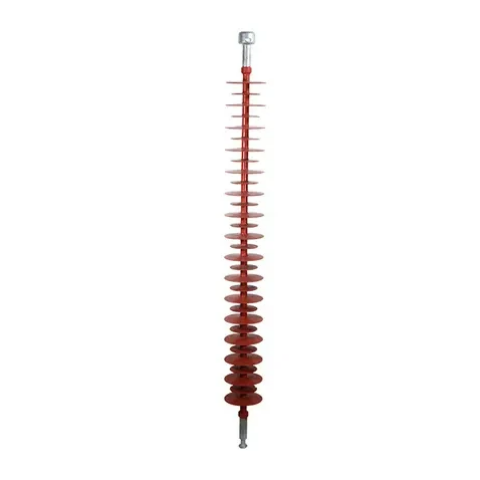
The shed profile, or the shape of the insulating sheds along the insulator, plays a significant role in both creepage distance and self-cleaning performance. As voltage increases, shed profiles evolve to balance electrical performance with resistance to dirt and water accumulation. The correct design of shed profiles ensures that UHV insulators can handle high-voltage stress while preventing pollution flashover.
From “install and forget” to “monitor and maintain”
As the demand for reliability in UHV systems grows, the approach to managing insulators shifts from “install and forget” to proactive monitoring and maintenance.
Condition monitoring trend for high-voltage assets
Utilities are increasingly investing in condition monitoring for high-voltage assets, including composite long rod insulators. This allows for early detection of potential issues such as material degradation or mechanical failure, helping prevent outages and extend the service life of the insulators.
What buyers increasingly ask for
Buyers of 500kV composite long rod insulators are increasingly requesting traceability, inspection records, and aging-related test evidence to ensure that the insulators they purchase meet long-term reliability standards. This trend towards higher transparency helps utilities mitigate risks associated with aging infrastructure.
Practical maintenance logic
For high-voltage systems, the inspection intervals are influenced by environmental factors, voltage class, and the overall condition of the system. By using condition monitoring data, maintenance schedules can be optimized to ensure that insulators are checked more frequently in harsher environments and less frequently in more stable settings.
What manufacturing capability signals matter at 500kV and toward 800kV
At 800kV and higher voltages, the manufacturing process becomes more sophisticated. A company’s capability to produce insulators at these voltage levels is a significant milestone.
Why producing 500kV+ long rod insulators is seen as a capability milestone
Manufacturing 500kV and 800kV insulators requires high levels of technical expertise, advanced machinery, and strict process controls. Only manufacturers with a high degree of specialization can produce insulators that meet the stringent requirements for UHV applications.
Process controls that become more critical
Increased voltage requires tighter controls over material composition, core rod bonding, housing molding, and end fitting attachment. Any deviation in the manufacturing process can result in insulators that fail under extreme operational conditions.
Project documentation readiness
In UHV applications, proper documentation is crucial for compliance and successful project implementation. From inspection reports to packing and shipment records, the documentation associated with high-voltage insulators needs to be precise and comprehensive.
Decision map for planners: matching corridor risk to insulator strategy
Here is a quick guide to help planners match insulator specifications to environmental and operational challenges.
UHV Challenge | What It Can Cause | Typical Design Response | Buyer Question to Ask |
Heavy pollution and wetting | Flashover risk | Increase creepage and enhance hydrophobic properties | What pollution level is assumed? |
High electric field at fittings | Corona, aging | Optimize field grading and fitting design | How are field-control features incorporated? |
Long service life | Material degradation | Use aging-focused testing and monitoring | What aging tests have been conducted? |
High mechanical loads | Mechanical failure | Ensure correct load class and fitting reliability | How is fitting attachment verified? |
Conclusion
The evolution of long rod insulators for 500kV and 800kV systems represents a significant leap forward in both design and performance. The higher voltage introduces new challenges related to electrical stress, pollution, aging, and mechanical loads, requiring insulators to be more robust and efficient. JD Electric’s commitment to producing top-tier composite insulators is demonstrated in our comprehensive testing, documentation, and global installations. If you are working on 500kV/UHV corridors, please contact us to discuss your project’s specific needs. We can help align your system’s voltage, mechanical load, and environmental conditions with the most suitable insulator configurations.
FAQ
1. What is the role of grading rings in UHV insulators?
Grading rings help distribute electric fields evenly across the surface of the insulator, reducing the risk of corona discharge and ensuring stable performance in high-voltage systems.
2. Why are composite long rod insulators used for UHV systems?
Composite materials offer better resistance to pollution, UV degradation, and mechanical stress compared to traditional porcelain insulators, making them ideal for UHV applications.
3. What are the key design changes for insulators in 500kV and 800kV systems?
Higher voltage systems require insulators to have increased creepage, improved mechanical strength, and enhanced resistance to environmental factors like pollution and aging.
4. How does JD Electric ensure the quality of its UHV insulators?
JD Electric uses self-produced raw materials, advanced manufacturing processes, and third-party test reports to ensure that its composite long rod insulators meet the highest standards for performance and durability.


