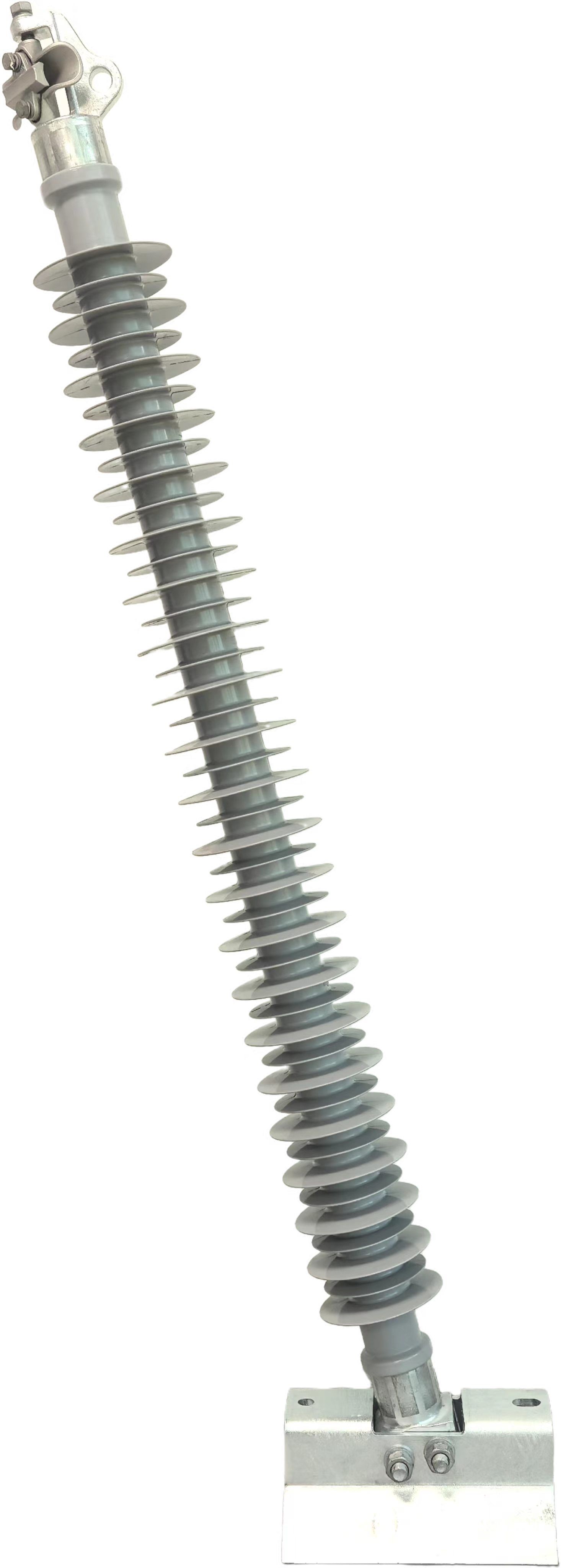
High-voltage infrastructure requires constant evolution to meet modern energy demands. Engineers and procurement teams increasingly pivot from traditional porcelain to composite materials. They make this shift to solve specific structural, seismic, and environmental challenges facing aging power grids. A Composite Post Insulator performs a highly specific and critical core function in these systems. It provides essential mechanical support and reliable electrical isolation for heavy high-voltage equipment. Substations rely heavily on these components to secure busbars, disconnectors, and switchgear safely under immense electrical stress.
We must move beyond basic definitions to fully understand this industry-wide shift. You need to carefully evaluate when, where, and why specifying these modern units makes practical engineering sense. We will explore how they offer technically sound solutions for enhanced grid resilience. You will learn how these components improve safety and streamline installation processes across diverse environments.
Key Takeaways
Primary Function: Secures busbars, disconnectors, and switchgear in substations while preventing current leakage to the ground.
Core Advantage: Offers superior seismic performance, reduced weight (up to 70% lighter than porcelain), and inherent hydrophobicity for high-pollution environments.
Risk Mitigation: Requires specific handling protocols to prevent fiberglass core damage and strict adherence to IEC/IEEE manufacturing standards.
Core Substation Applications and Operational Roles
Structural Support for Busbars
Substations endure massive physical forces during operation. Short circuits generate violent electromechanical shocks across the system. A composite unit holds high-voltage busbars securely in place. They absorb these sudden physical impacts highly effectively. Without rigid and flexible support, heavy busbars could sway or collapse entirely. Engineers rely on these insulating pillars to maintain exact spacing between phase conductors.
Integration with Disconnector Switches
Disconnector switches require robust rotational mechanisms to function correctly. You will frequently see post insulators serving as static or rotating supports in switchgear assemblies. This specific application demands exceptionally high torsional strength. The insulator must withstand the repetitive twisting forces applied when switches open and close. Composite materials handle these torsional stresses without the micro-cracking common in ceramics.
Capacitor Banks and Reactor Supports
High-voltage capacitor banks and series reactors vibrate continuously. They represent heavy, bulky equipment requiring stable elevation from the ground. Weight reduction becomes a major structural priority in these specific installations. Using lighter support structures minimizes the mechanical burden on the foundation. Planners routinely choose composite units here to simplify structural engineering requirements and reduce base pad sizing.
High-Pollution Coastal and Industrial Sites
Industrial pollution and coastal salt fog destroy standard insulation systems rapidly. Contaminants settle on the surface and create conductive pathways. This eventually leads to catastrophic contamination flashovers. We see composite housings excel in these harsh locations. Their silicone rubber material possesses inherent hydrophobic properties. This means water beads up and rolls off the surface instantly. It actively prevents a continuous conductive water film from forming.
Evaluating Polymer Post Insulators vs. Traditional Porcelain
Mechanical and Seismic Performance
Seismic resilience dictates modern substation design codes. Traditional porcelain is inherently brittle and rigid. It shatters catastrophically under extreme vibrational stress or earthquake conditions. A Polymer Post Insulator utilizes a flexible internal fiberglass core. This internal rod absorbs seismic shocks smoothly. Modern grid compliance requires equipment to meet strict IEEE 693 seismic standards. Polymeric units pass these high-vibration tests effortlessly due to their shock-absorbing nature.
Weight and Installation Economics
Logistics present another clear dividing line between the two technologies. Porcelain units weigh an enormous amount. They require heavy-duty cranes for careful positioning. A polymer unit is typically 70% lighter than its ceramic counterpart. This drastic weight reduction eliminates the need for massive cranes in restricted substation spaces. Lighter units also lower freight costs significantly. Installation crews can maneuver them quickly and safely.
Contamination and Flashover Resistance
Hydrophobicity transfer makes silicone rubber uniquely powerful. Low molecular weight elements within the silicone naturally migrate to the surface. They encapsulate dirt, dust, and salt particles. The surface continues to bead water even when heavily polluted. Traditional porcelain lacks this self-healing chemical mechanism. Utility companies must schedule costly washing routines for porcelain to prevent flashovers. Polymeric housings eliminate most of this required washing.
Vandalism and Safety
Safety considerations extend beyond electrical faults. Porcelain fragments explosively if an internal arc occurs or someone vandalizes it. Flying ceramic shrapnel endangers nearby personnel and adjacent expensive equipment. Composite materials are entirely shatter-proof. If a catastrophic failure occurs, the silicone housing splits or melts safely. The fiberglass core remains intact, preventing explosive fragmentation. This fail-safe characteristic protects human lives on site.
Chart: Material Comparison Summary
Performance Criteria
Traditional Porcelain
Composite / Polymer
Seismic Resilience
Poor (Brittle, shatters easily)
Excellent (Flexible, absorbs shock)
Weight Profile
Very Heavy (Requires large cranes)
Lightweight (70% lighter)
Pollution Performance
Requires frequent washing
Hydrophobic, self-cleaning
Failure Mode
Explosive fragmentation
Non-shattering, safe tear
Key Technical Specifications for Procurement Decisions
Specified Cantilever Load (SCL)
Engineering teams must evaluate bending strength before procurement. You calculate this by looking at the installation angle and the supported equipment weight. Specified Cantilever Load (SCL) defines this precise bending limit. If wind loads or short-circuit forces exceed the SCL, the core will buckle. You must request load-deflection curves from your vendor. These charts prove the unit will not bend past operational tolerances.
Creepage Distance and Arcing Horns
Environmental conditions dictate your exterior profile design. Creepage distance refers to the shortest path across the insulator surface. You match the shed profile to your site’s specific pollution severity level. A high-pollution zone requires an extended creepage distance. Arcing horns are metallic rings added to the ends. They divert destructive electrical arcs away from the delicate silicone sheds during lightning strikes.
Fiberglass Core Integrity
The central rod provides all mechanical strength. You must pay close attention to core material chemistry. We strongly recommend ECR-glass (Electrical Corrosion Resistant) cores over standard E-glass. ECR-glass prevents acid-induced brittle fracture. Brittle fracture occurs when nitric acid forms from electrical corona discharge. This acid attacks standard fiberglass, causing sudden structural collapse. An ECR-glass core guarantees long-term chemical immunity.
Compliance and Certifications
Vendors often make bold performance claims. You verify these claims through strict adherence to global standards. Your procurement checklist must mandate IEC 61952 compliance. North American projects should also demand ANSI/NEMA benchmarking. These documents represent non-negotiable manufacturing standards. A certified Composite Post Insulator undergoes rigorous laboratory scrutiny. Never accept units lacking documented type-test certificates from accredited third-party testing facilities.
Implementation Realities, Risks, and Lifecycle Management
Handling Vulnerabilities
Skeptics frequently raise valid concerns about handling damage. The silicone housing resists blunt impacts remarkably well. However, the internal fiberglass rod remains highly sensitive to bending stress before installation. If a contractor rigs the unit improperly, the internal core will snap invisibly. You must avoid placing lateral strain on the unit while it rests on the ground. Strict contractor training prevents these expensive handling errors.
Environmental Degradation Factors
We must look objectively at environmental wear over a 25-year lifespan. Ultraviolet radiation breaks down chemical bonds slowly. This continuous UV exposure eventually turns silicone rubber chalky and hard. Additionally, local wildlife poses unique risks. Birds occasionally peck at the sheds, and rodents chew on the flanges. Premium HTV (High-Temperature Vulcanized) silicone formulations resist these environmental stressors far better than cheaper liquid silicones.
Diagnostic Challenges in the Field
Porcelain provides visual simplicity during failure. It cracks visibly or shatters into pieces. A Polymer Post Insulator hides internal damage very well. Internal electrical tracking or fiberglass core degradation leaves no immediate outward signs. You cannot simply walk past it and spot a defect. Maintenance teams require specialized diagnostic equipment for proper inspection. We recommend using daylight UV cameras or electric field mapping tools to detect hidden internal faults early.
Table: Common Risks and Mitigation Strategies
Identified Risk
Root Cause
Mitigation Action
Core Snapping
Improper crane rigging on site
Implement strict handler training
Brittle Fracture
Nitric acid attacking E-glass
Specify ECR-glass cores only
Hidden Faults
Internal tracking under housing
Deploy UV camera inspections
Shortlisting Logic: How to Select a Qualified Manufacturer
You cannot treat these high-voltage components as simple commodities. Choosing a manufacturer requires diligent technical vetting. Follow this structured logic to shortlist reliable vendors effectively:
Demand Supply Chain Transparency: Request absolute clarity on raw material sourcing. You need to know the exact origin of the HTV silicone rubber. Ask for documentation regarding their core rod pultrusion process. Cheaply sourced materials fail prematurely in the field.
Evaluate Routine Testing Capabilities: Inspect the manufacturer’s internal testing facility capabilities. Do they perform 100% routine mechanical and electrical tests? Every single unit must undergo a tension test before shipping to guarantee structural soundness.
Assess Customization Flexibility: Project demands vary wildly. Assess your vendor's ability to adjust flange designs quickly. They should offer choices between hot-dip galvanized steel and aluminum end-fittings. They must easily modify shed profiles to match your target creepage distance.
Verify Proven Field History: Laboratory tests only tell half the story. Prioritize manufacturers who present long-term service data. Demand case studies from climates similar to yours. They must prove success in extreme cold, high UV zones, or heavy salt fog environments.
Conclusion
Choosing a composite solution involves making calculated engineering trade-offs. You trade the traditional diagnostic simplicity of porcelain for drastically improved seismic safety. You gain unparalleled pollution resistance and streamlined installation efficiency. These units prevent explosive shrapnel risks, securing the physical safety of your substation personnel. However, realizing these benefits requires rigorous vendor selection and careful handling protocols.
Here are your actionable next steps:
Calculate your exact Specified Cantilever Load (SCL) based on current site wind data and equipment weights.
Review your local pollution severity levels to dictate the correct creepage distance.
Request certified type-test reports from shortlisted vendors before making final technical approvals.
Update your internal contractor training manuals to include modern composite handling rules.
FAQ
Q: What is the expected lifespan of a composite post insulator?
A: They typically last 20 to 30 years. The exact duration depends highly on environmental UV exposure and the specific chemical formulation of the silicone housing. Premium HTV silicone formulations generally achieve the longest service life under harsh sunlight.
Q: Can polymer post insulators be installed horizontally?
A: Yes, you can install a Polymer Post Insulator horizontally. However, you must accurately calculate the Specified Cantilever Load (SCL) first. The core must handle the direct downward bending stress caused by the supported equipment weight and gravity.
Q: Do composite insulators require routine washing?
A: Rarely. Their hydrophobic silicone properties make them largely self-cleaning during normal rainfall. However, facilities located in extreme industrial dust zones may still warrant condition-based monitoring and occasional cleaning.
Q: How does the cost compare to porcelain insulators?
A: Unit material costs are often comparable or slightly higher. However, significant logistical savings emerge immediately. Lighter weights reduce expensive freight charges, and they eliminate the need for specialized heavy-duty cranes during the installation process.