Field-testing an electrical insulator for leakage current differs vastly from controlled laboratory evaluations. Environmental variables, unpredictable loads, and parasitic capacitance inherently complicate these measurements. Engineers must navigate this real-world noise to capture accurate diagnostic data.
Failure to accurately quantify this leakage leads directly to nuisance GFCI tripping and costly compliance violations. Furthermore, it masks undetected degradation slowly advancing toward catastrophic flashovers. You simply cannot afford to let subtle faults evolve into major equipment outages.
This comprehensive guide details how to select the right testing methodology and execute a reliable field test. You will learn specific routing techniques to bypass environmental interference safely. Finally, we will help you evaluate your field results against strict industry standards.
Key Takeaways
Field leakage current consists of both resistive (insulator degradation) and capacitive (system design/cable length) components; distinguishing them is critical for diagnostics.
Standard clamp meters are ineffective for low-level leakage; specialized high-sensitivity clamp meters or insulation resistance testers (megohmmeters) with a "Guard" terminal are required.
Environmental pollution (salt, dust) and humidity heavily skew field measurements, necessitating specific routing techniques to bypass surface leakage.
Unless specified by a distinct regulation, industry-standard AC leakage current limits are measured in RMS (Root Mean Square), not peak values.
The Business and Operational Stakes of Insulator Leakage
Leakage current refers to the unintended flow of current through an insulation body or ground path under normal operating conditions. It fundamentally differs from fault current. Fault current occurs during a complete insulation breakdown. Conversely, leakage happens continuously at low levels. While minor leakage is normal, excessive amounts indicate severe operational risks.
Operational Consequences
Unmanaged leakage currents generate significant disruptions across an electrical network. The most immediate impact is nuisance tripping. Accumulated leakage frequently exceeds the 5mA threshold of Class A GFCIs. This causes random downtime across sensitive circuits. Facilities often struggle to identify the source of these intermittent trips.
Beyond nuisance trips, tracking leakage current plays a crucial role in predictive maintenance. Field technicians monitor harmonic signatures within the leakage profile. Surges in the 3rd and 5th harmonics serve as early indicators of surface arcing. Tracking the Total Harmonic Distortion (THD) helps you preemptively catch flashover risks before they destroy equipment.
Resistive vs. Capacitive Leakage
Field diagnostics require distinguishing between two distinct types of leakage. They behave differently and originate from different sources.
Resistive Leakage: This results directly from insulator aging, thermal breakdown, or physical damage. Resistive flow indicates true degradation. It serves as a major red flag during field testing.
Capacitive Leakage: This is a natural byproduct of long conductor runs and electronic input filters. Electromagnetic interference (EMI) filters inherently leak small amounts of alternating current to ground. Capacitive leakage is not inherently dangerous. However, it easily masks underlying resistive faults during your live field evaluations.
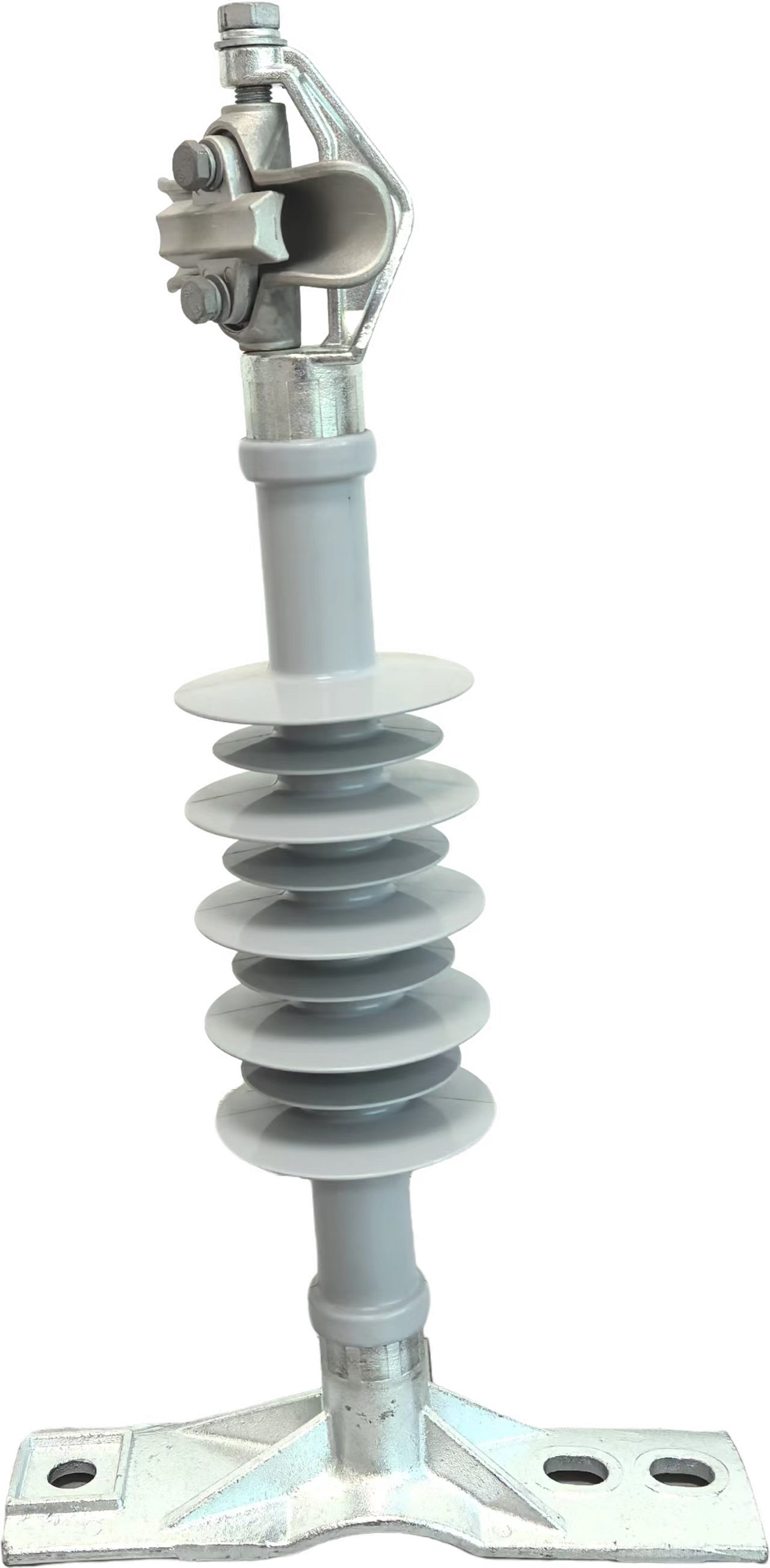
Selecting the Right Field Testing Equipment
Field teams must evaluate their tools rigorously before deployment. Key criteria include measurement resolution, live versus dead circuit requirements, and harmonic filtering capabilities. Using the wrong tool guarantees flawed data.
Method 1: High-Sensitivity Leakage Clamp Meters (Live Testing)
High-sensitivity clamp meters excel at troubleshooting active circuits. They help you diagnose nuisance trips without shutting down critical facility equipment. Standard multimeters lack the resolution for this task. You need a device capable of measuring below 1mA accurately.
Furthermore, the meter must feature a narrow band-pass filter. Industrial environments generate massive electrical noise. Telecom equipment and variable frequency drives (VFDs) push high-frequency interference onto the line. A band-pass filter isolates the 60Hz or 50Hz fundamental frequencies. This ensures you only measure relevant leakage.
Method 2: Insulation Resistance Testers / Megohmmeters (Offline Testing)
Megohmmeters provide direct evaluations of Insulator health. Technicians deploy them during commissioning phases or routine maintenance shutdowns. These devices output high direct current (DC) voltages to measure internal resistance.
Because they use DC voltage, megohmmeters possess a unique operational limitation. They charge the circuit capacitance initially, but the capacitive current quickly drops to zero. Consequently, a megohmmeter will not capture the capacitive leakage present during standard AC operations. It strictly measures resistive degradation.
Method 3: Portable Hipot Testers (Dielectric Withstand)
Portable Hipot testers stress-test insulation at elevated voltages. They verify lifecycle safety margins. When using a Hipot tester in the field, power supply stability becomes a crucial factor.
These testers require an isolation transformer. You must ensure the transformer carries at least a 20% to 30% capacity redundancy. This prevents test-voltage drops when the device powers up. Voltage sags during execution invalidate the dielectric withstand results immediately.
Equipment Comparison Chart
Testing Method | Primary Use Case | Circuit State | Key Limitation or Requirement |
High-Sensitivity Clamp Meter | Diagnosing GFCI nuisance trips | Live (Active) | Requires narrow band-pass filtering |
Megohmmeter | Routine health checks | Offline (Dead) | Only measures resistive degradation |
Hipot Tester | Lifecycle stress testing | Offline (Dead) | Needs 20-30% transformer redundancy |
Standard Operating Procedure (SOP) for Field Testing
Reliable data stems from disciplined execution. Field environments introduce numerous safety hazards and measurement traps. Follow these standardized steps to secure accurate readings.
Pre-Test Preparation (Safety First)
You must prioritize safety protocols. Before deploying a megohmmeter or Hipot tester, verify absolute circuit isolation. Lockout/tagout (LOTO) procedures are mandatory.
Next, disconnect all sensitive power electronics. Surge protection devices (SPDs) and delicate microprocessors cannot withstand diagnostic voltages. Leaving them connected guarantees accidental high-voltage punch-through and catastrophic hardware damage.
Executing a Live Clamp Test (Single Phase)
When measuring leakage on a live single-phase circuit, ordinary current measurement techniques do not apply. You must capture the imbalance between conductors.
Power on the circuit and the connected loads.
Open the high-sensitivity clamp meter jaws.
Clamp around both the phase (hot) conductor and the neutral conductor simultaneously. Do not include the ground wire inside the clamp.
Close the jaw completely to eliminate air gaps.
Read the display value.
Diagnostic logic: The outbound current on the phase wire and the return current on the neutral wire generate opposing magnetic fields. These fields cancel each other out perfectly in a healthy circuit. Any residual unbalance displayed on your meter represents the exact current leaking to ground.
Executing an Offline Insulation Test (Deploying the Guard Terminal)
Offline testing requires connecting positive and negative leads across the insulation path. Often, technicians receive unexpectedly low readings, such as 50 kΩ. This usually stems from surface moisture rather than internal failure. You can eliminate this error using the Guard terminal.
Disconnect the component from power.
Attach the positive and negative leads to opposing ends of the conductor path.
Wrap a bare copper wire tightly around the exterior sheath or skirt.
Connect this copper wire to the tester’s "Guard" terminal (typically colored blue).
Initiate the high-voltage DC test.
Outcome: This surface bypassing trick routes external leakage directly back to the meter's internal circuit. Condensation and dirt no longer skew the primary measurement. You successfully isolate the true internal resistance of the material.
Compensating for Environmental Interference in the Field
Laboratory tests occur in climate-controlled rooms. Field tests face brutal environmental realities. Weather and airborne particulates aggressively alter electrical resistance.
Humidity and Wetting (Wt)
Moisture exponentially increases surface tracking. Morning dew or high humidity creates a microscopic conductive film. Tests must document ambient weather conditions precisely. If you test during high humidity, utilize the Guard wire method. It filters out moisture-induced surface current, preventing premature failure designations.
Contamination (SDD/NSDD)
Airborne pollution creates conductive pathways over time. We classify these deposits into two main categories:
Soluble Deposit Density (SDD): Salt and coastal marine environments deposit sodium chloride. When wetted by fog, SDD becomes highly conductive.
Non-Soluble Deposit Density (NSDD): Dust, kaolin, and industrial ash form thick layers. They trap moisture against the surface, accelerating tracking.
High-frequency leakage analysis helps differentiate severe external contamination from total internal failure. If harmonic distortion reads unusually high, you likely face severe SDD accumulation rather than an internal puncture.
Parallel Ground Paths
Unintentional grounding complicates field tracing. Structural steel, concrete foundations, or nearby water pipes frequently act as parallel ground paths. They split the leakage current, causing your primary ground wire to show deceptively low readings.
Tracing these parallel paths requires patience. You must sequentially disconnect facility loads. By isolating sections one by one, you force the leakage back through your measurement device, identifying the true primary source.
Evaluating Results Against Industry Standards
Gathering data is only half the battle. You must interpret those micro-amps correctly. Field engineers frequently face ambiguity regarding exact client requirements.
Interpreting the Data (RMS vs. Peak)
When clients demand leakage below a specific threshold, confusion often arises around measurement types. Unless explicitly defined by a niche regulation, standard compliance for AC leakage refers to the RMS (Root Mean Square) value. Do not compare peak measurements against RMS regulatory limits.
Key Regulatory Thresholds
Different equipment categories demand vastly different safety margins. The regulatory landscape establishes rigid operational boundaries.
Standard Framework | Equipment Category | Maximum Leakage Limit |
IEC 61010 | Industrial / Laboratory Equipment | < 3.5 mA |
UL 60950 | Consumer / IT Equipment | < 0.5 mA |
IEC 60601 | Medical Devices (Type B) | < 100 µA |
Medical devices require exceptionally strict monitoring. Limits under 100 µA frequently force engineers to install medical isolation transformers in the field to eliminate ground loops.
GFCI Operational Limits
Ground Fault Circuit Interrupters dictate the practical limits of facility leakage. Class A GFCIs protect personnel. They are legally required to trip at 5 mA. If your combined capacitive and resistive leakage nears 4 mA, random trips become inevitable.
Class B GFCIs serve a different purpose. They protect high-leakage infrastructure, such as legacy pool equipment or large motor drives. Class B breakers trip at 20 mA. They tolerate higher capacitive bleeding without interrupting operations.
Decision Matrix
Evaluate your field tests using a clear matrix. If offline testing yields greater than 1 MΩ insulation resistance, the hardware generally passes. This holds especially true for solar PV systems operating above 120V DC.
During live testing, active leakage below 3.5 mA passes for industrial environments. However, values approaching the 5 mA GFCI threshold require immediate action. You must sectionalize the circuit. Locate the exact source of capacitive or resistive bleeding to stabilize the network.
Conclusion
Accurate field testing bridges the massive gap between theoretical laboratory compliance and real-world operational reliability. Testing outside controlled environments requires robust methodologies to strip away noise, moisture, and parallel pathways.
By combining the right diagnostic tools, such as narrow-band clamp meters or Guard-equipped megohmmeters, teams secure precise insights. Understanding how environmental variables skew resistance prevents costly misdiagnoses. Field technicians can preemptively address early-stage tracking before it triggers catastrophic flashovers or facility-wide downtime.
Next Step: Audit your current field testing protocols today. Ensure your technicians carry meters capable of micro-amp resolution. Furthermore, mandate training on surface-leakage bypass techniques, guaranteeing that future maintenance data reflects true material health.
FAQ
Q: Why can't I use a standard multimeter or clamp meter to test leakage current?
A: Standard meters lack the resolution to accurately read below 5mA. They also do not have the necessary narrow band-pass filters to reject high-frequency electrical noise from surrounding equipment, which invariably leads to false readings in industrial settings.
Q: Does a DC insulation resistance test measure capacitive leakage?
A: No. Because it uses direct current (DC), an insulation tester (megohmmeter) will charge the capacitance in the circuit quickly and then drop to zero. It only measures the resistive degradation.
Q: What is the purpose of the third "Guard" wire on a leakage tester?
A: The Guard wire intercepts surface leakage current—often caused by dirt or moisture on the outside—and bypasses the measurement circuit. This ensures the reading reflects only the actual internal health.
Q: Is a client's request for "< 3.5mA leakage" referring to peak or RMS?
A: Industry standard defaults to RMS (Root Mean Square) for AC leakage current measurement. Unless a specific regulation or standard explicitly requests the peak value, always record and report the RMS data.


