Electrical grids depend heavily on robust hardware to keep power flowing safely. We traditionally view ceramic components as permanent, lifetime grid installations. However, this engineering reality is much more complex. Continuous electrical and mechanical stress causes inevitable aging over decades of outdoor service. Utility managers and procurement teams need accurate lifecycle data to model long-term grid reliability. Without this critical data, networks risk sudden, unexpected flashovers or severe structural failures. Knowing exactly how these components age helps you plan better operational schedules. In this guide, we examine the verifiable outdoor lifespan of a ceramic Insulator. You will discover exactly how environmental degradation factors shorten service life over time. We also explore practical ways to evaluate longevity and compare field performance against modern polymer alternatives. Let us dive directly into the science of hardware aging and environmental survival.
Key Takeaways
Baseline Lifespan: Quality ceramic insulators typically operate reliably for 40 to 60 years in standard outdoor environments.
TCO Advantage: Despite a higher initial weight and cost, ceramic yields a lower Total Cost of Ownership compared to polymer alternatives, which generally require replacement every 20 years.
Primary Risks: While highly resistant to UV degradation, ceramic longevity is primarily threatened by severe industrial pollution, coastal salinity, and physical shock.
Testing Metrics: Degradation is measurable; an FL/RTL (Failure Load to Routine Test Load) ratio falling below 2 indicates critical aging requiring replacement.
Baseline Lifespan: How Long Do Ceramic Insulators Actually Last?
We often hear a common question in grid engineering. How long will a ceramic component actually survive outdoors? Industry data provides a clear baseline. A well-manufactured ceramic Insulator will last between 40 and 60 years. Many utility companies operate lines older than this. Yet, reaching this impressive milestone depends heavily on normal grid conditions.
The "Zero Degradation" Myth
Some engineers assume ceramics never age. This is a dangerous myth. Unlike plastics, they do not suffer from direct ultraviolet (UV) degradation. The sun cannot break down their chemical bonds. However, decades of outdoor exposure still cause micro-structural fatigue. Wind, ice, and constant line tension create microscopic stress points. Over forty years, these tiny flaws expand.
Constant mechanical vibration weakens internal cement joints over time.
Micro-cracks form invisibly beneath the smooth outer surface.
Metal caps and pins rust long before the porcelain body fails.
Material Science Factors
Ceramic longevity relies on intense manufacturing processes. We fire these units at extreme temperatures. Kilns reach up to 3100°F (1704°C). This extreme heat fuses the raw materials into a dense, non-porous structure. Manufacturers then apply a specialized exterior glaze. This glaze serves several critical functions.
Moisture Lockout: The hardened glaze prevents any water penetration into the core.
Dielectric Strength: The dense core provides exceptional electrical resistance. Testing shows it exceeds 20,000 V/mm.
Mechanical Rigidity: The final fired shape resists physical deformation better than almost any other grid material.
Ceramic vs. Polymer Insulators: A Lifecycle Comparison
Modern grids often use polymer or silicone alternatives. They are lighter and easier to install. However, their operational lifecycles look very different. Understanding these differences helps you make better long-term engineering decisions.
The Polymer Degradation Curve
Polymer materials face harsh natural realities. Sunlight and ozone constantly attack their molecular structure. This natural aging causes internal cross-linking. As polymers cross-link, they become increasingly brittle. Engineers measure this embrittlement using elongation at break (EB). Field research shows EB drops significantly over two decades. Once EB drops below 50 percent of its original value, structural integrity fails. This material fatigue limits their safe lifespan to roughly 20 to 23.5 years.
Hydrophobicity Loss
Silicone components start with an excellent water-repelling surface. We call this characteristic hydrophobicity. Drops of water bead up and roll off smoothly. Over time, polymers lose this critical surface contact angle. When the contact angle falls below 90°, water forms continuous bands. This increases the risk of dangerous water band discharges. Ceramic units behave differently. They do not rely on inherent hydrophobicity in the same way. They rely instead on their rigid glaze and specialized shedding shapes.
Lifecycle Replacement Frequency
Think about long-term grid operations. A ceramic unit stays on the pole for half a century. If you use a polymer alternative, you must replace it twice or even three times during that same period. This high replacement frequency means more maintenance outages. Line crews face more hazardous climbing hours. You double the logistical effort needed to keep the line active.
Performance Metric | Ceramic Material | Polymer/Silicone Material |
Expected Lifespan | 40 to 60 years | 20 to 23.5 years |
UV Resistance | Complete immunity | Highly susceptible to degradation |
Surface Degradation | Glaze wear from arcing | Loss of hydrophobicity (< 90° angle) |
Replacement Frequency | Once per half-century | 2 to 3 times per half-century |
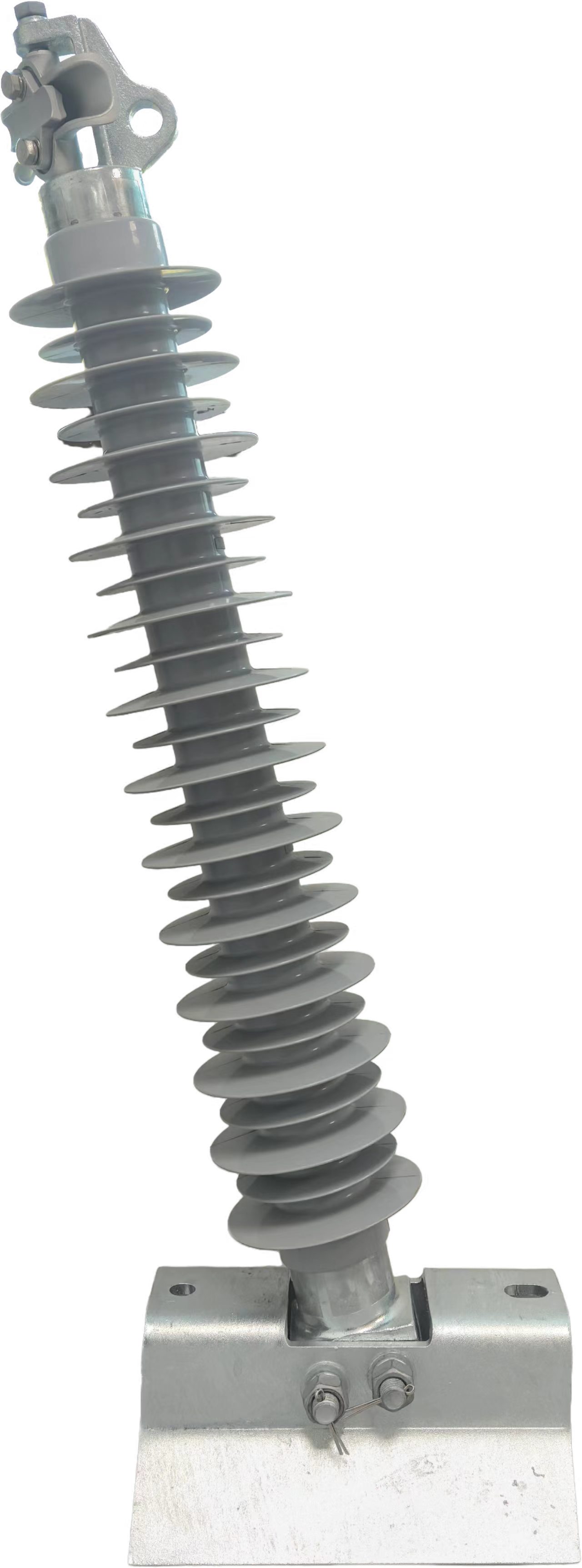
Environmental Stressors That Shorten Ceramic Lifespan
Even a tough ceramic Insulator has distinct vulnerabilities. Certain environments accelerate the aging process significantly. You must understand these local stressors to predict accurate lifecycles.
Coastal Salinity and Severe Pollution
Ocean winds carry heavy salt fog miles inland. Industrial plants emit dense chemical exhaust. These pollutants eventually settle on the ceramic glaze. When light rain or morning dew hits, this pollution turns into a highly conductive surface layer. Current begins to leak across the surface. This leads directly to dry-band arcing. Prolonged arcing physically burns and damages the protective glaze. Once the glaze fails, the ceramic core degrades much faster.
Extreme Temperature Cycling
Deserts and high-altitude regions experience rapid thermal shifts. The temperature might swing 50 degrees in just a few hours. Rigid ceramic structures struggle with these sudden thermal changes. Flexible materials expand and contract easily. Ceramics, however, are inherently brittle. Rapid thermal cycling triggers micro-cracking deep within the porcelain body. Over time, these thermal shocks compromise the mechanical strength.
The Maintenance Burden in High-Risk Zones
Heavily polluted areas demand intense operational maintenance. Coastal nuclear power plants serve as prime examples. Standard ceramics in these zones accumulate salt very rapidly. Grid operators must perform frequent hot washing. Line crews spray high-pressure demineralized water onto live transmission lines. This represents a complex, high-risk operational burden.
Mitigation Strategy: Hybrid Solutions
You can extend maintenance intervals in extreme environments effectively. Engineers now frequently use silicone-coated ceramic or glass units. This hybrid strategy combines the structural permanence of ceramic with the surface hydrophobicity of silicone. The silicone coating prevents continuous water films from forming. It stops dry-band arcing early and practically eliminates the need for constant hot washing operations.
How to Evaluate Insulator Health and Aging in the Field
You cannot simply look at a unit from the ground and know its health. Grid operators use specific testing protocols to measure degradation accurately. These metrics separate healthy hardware from failing components.
Electrical Testing Standards
Pollution burns eventually compromise the protective glaze. When this happens, the surface resistance drops dramatically. Technicians use artificial fog chambers to test older units drawn from the field. They measure the exact leakage current under simulated weather. Furthermore, aging units lose their internal puncture resistance over time. A brand new ceramic unit withstands testing above 100 kV easily. A severely aged unit might suffer a puncture at very low frequencies, such as 60 Hz at just 10 kV.
Mechanical Load Assessments
Engineers rely on precise mechanical metrics to judge safety. The most critical evaluation metric is the FL/RTL ratio. This stands for Failure Load to Routine Test Load. Technicians apply the standard routine test load (RTL) to check baseline integrity. Next, they increase tension until the unit physically breaks (Failure Load). They calculate the exact ratio between these two numbers. If the FL/RTL ratio falls below 2, the unit exhibits critical aging. It requires immediate replacement to prevent a dropped line.
Visual and Ultrasonic Inspections
Line crews also perform thorough on-site diagnostics. Modern inspections use high-definition cameras and specialized ultrasonic sensors.
Micro-cracking: Ultrasonic acoustic waves detect invisible internal cracks before they spread.
Cement Growth: The mortar holding the metal pins often expands over decades. This internal expansion cracks the porcelain head outward.
Hardware Corrosion: Inspectors look closely at metal caps and pins, which often rust long before the ceramic itself fails.
| | Degradation Indicators Chart |
Inspection Method | What It Measures | Critical Warning Sign |
Fog Chamber Test | Surface leakage current | Puncture at 60 Hz / 10 kV |
Load Testing | Mechanical tensile strength | FL/RTL ratio drops below 2 |
Ultrasonic Scan | Internal material integrity | Acoustic anomalies indicating micro-cracks |
Visual Survey | Hardware and cement state | Visible rust or mortar expansion |
Procurement Checklist: Specifying Ceramic Insulators for Long-Term Reliability
You must specify the right parameters long before purchasing. Poorly specified components will fail prematurely regardless of material quality. Use this checklist to ensure long-term grid performance.
Creepage Distance Calculations
Always match the specified creepage distance to your local pollution severity level. Creepage is the shortest path along the surface between the two metal ends. High-pollution areas need a significantly longer creepage path. This simple design choice prevents premature surface degradation and stops arcing.
Mechanical Load Ratings
You must calculate the actual mechanical stress your line creates. Factor in the sheer weight of the conductive cable. Add the highest historical wind speeds for your region. Calculate maximum ice-loading realities during severe winters. Ensure the unit provides a massive compressive strength buffer. Advanced ceramics offer compressive strengths exceeding 400,000 psi. Always match tensile and cantilever strengths to your absolute worst-case scenarios.
Supplier Manufacturing Standards
Never assume all manufacturers provide the exact same quality. Poor quality control directly reduces the baseline 40-year lifespan. Verify their internal testing processes carefully. Check their wet and dry compression methods. Ensure they use precise, automated glazing techniques. Request strict documentation on their kiln firing temperatures and cooling cycles.
Actionable Next Step
Do not finalize bulk procurement based on simple data sheets. Always request comprehensive lifecycle testing data. Ask the manufacturer for performance models specific to your regional climate before making a decision.
Conclusion
Properly specified ceramic units represent a true 40-to-60-year operational asset. They heavily outperform polymer alternatives in long-term field endurance and replacement frequency. They resist UV radiation perfectly and maintain structural integrity across decades of service. You must, however, account for environmental extremes. Salt, severe pollution, and sudden temperature swings demand careful creepage planning or silicone coatings. Evaluate your field health constantly using strict FL/RTL metrics and electrical puncture tests. As a next step, contact your technical engineering team. Request regional environmental assessments immediately. Gather custom load-rating data before planning your next major transmission line upgrade.
FAQ
Q: Do ceramic insulators degrade from UV exposure?
A: No. Unlike polymer options, ceramic is completely immune to UV radiation. The sun cannot break down their chemical bonds, ensuring long-term surface stability.
Q: Why do older ceramic insulators fail?
A: Failures rarely stem from the ceramic material itself. They typically occur due to hardware corrosion, cement expansion inside the joint, or severe glaze destruction caused by prolonged dry-band arcing.
Q: Is it better to wash ceramic insulators or replace them with polymer?
A: It depends on the local pollution level and your operational lifecycle targets. Frequent hot washing demands heavy labor. Applying a silicone coating to your ceramic or glass units often proves safer and highly effective without requiring a full polymer retrofit.
Q: How heavy is a ceramic insulator compared to polymer?
A: Ceramic is significantly heavier. This high density requires more robust pole support structures. You must ensure careful installation handling, which you should factor into your initial deployment planning and logistics.


